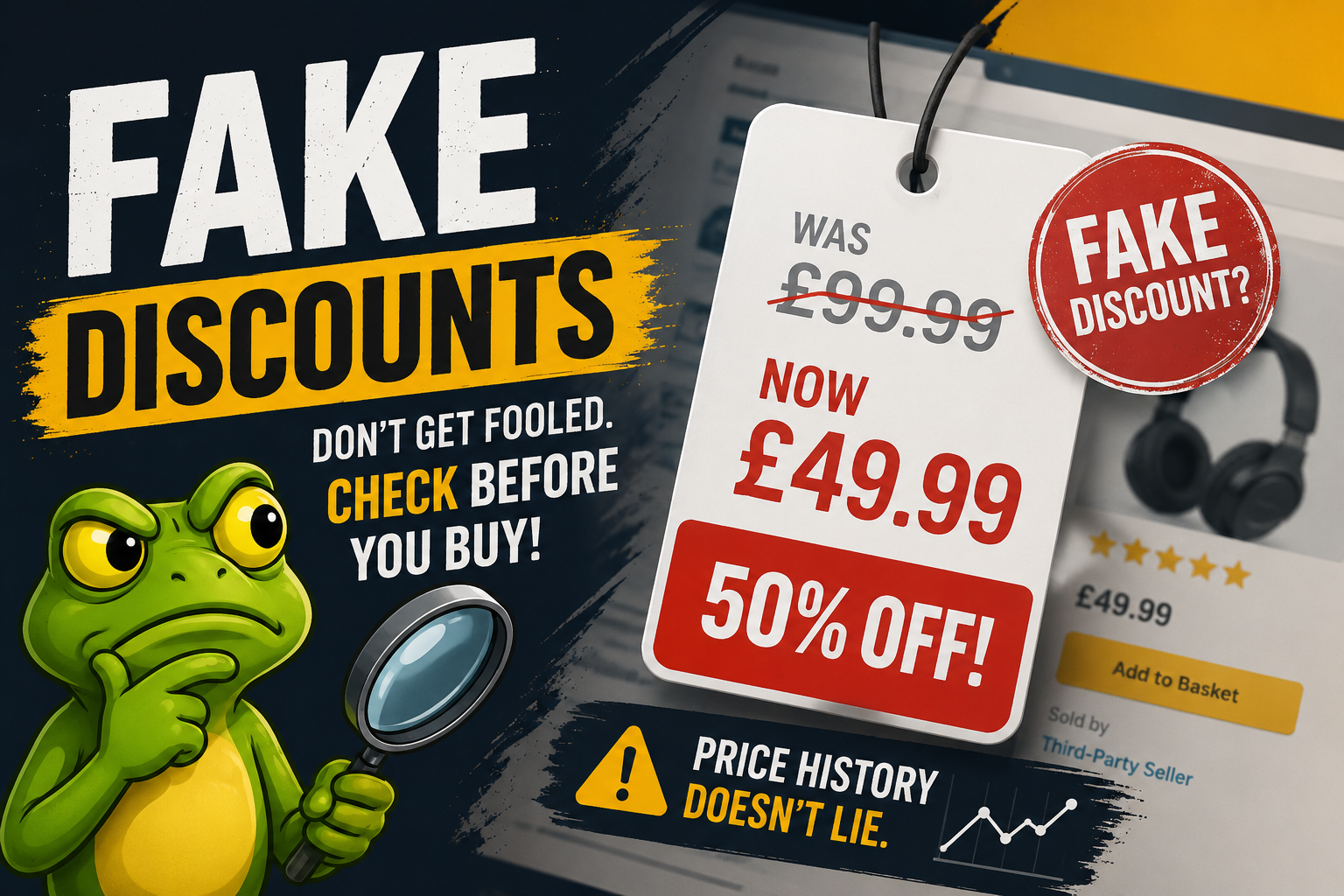
A big red “40% off” sign feels like good news. But a discount is only real if the price you are paying is genuinely lower than what the product normally costs. Quite often, it isn’t. The “saving” is measured against a price the item never really sold at, so you end up paying the usual amount with a sticker that makes it feel like a win.
Here is how to tell a genuine discount from one that just looks like one.
What makes a discount fake
A fake discount usually comes down to the reference price, the higher figure the “saving” is measured against. If that figure is inflated, the discount is inflated too. A few common patterns:
The price gets raised before a sale. An item sits at one price for months, creeps up in the weeks before a big sales event, then drops back to roughly its old price during the event. The “reduction” is real on paper, but you are paying what you would have paid anyway.
The “was” price is a number nobody paid. Sometimes the crossed-out figure is a manufacturer’s suggested price that the product hasn’t sold at in years, if ever. The saving looks huge because the starting point is fiction.
The same “limited time” deal keeps coming back. A price that’s billed as a rare, ending-soon offer but actually returns every few weeks isn’t really a deal. It’s just the normal price wearing a countdown timer.
The signs to watch for
You can catch most fake discounts with a few quick checks:
The “was” price looks too high. If the original figure seems far above what you’d expect the item to cost, be suspicious. Genuine discounts are measured against believable prices.
The saving is suspiciously large. A 70% or 80% “saving” on a mainstream product is worth questioning. Real discounts that big are rare. A reference price that produces one is often inflated.
There’s heavy urgency. Countdown timers, “only 3 left,” and “deal ends soon” are pressure tactics. They don’t tell you anything about whether the price is good. A genuinely good price doesn’t need a ticking clock to be worth buying.
The price feels familiar. If you’ve seen the item at this “sale” price before, it probably isn’t a sale price at all.
How to actually check
The only way to know for certain is to compare the current price against what the product has really cost over time. Not the crossed-out figure, not the percentage on the badge, but the actual prices over recent months.
If the current price is at or near its lowest in months, the discount is genuine. If it’s sitting around the same level it’s been at all along, the “saving” is just marketing. The price history tells you the truth that the badge won’t.
The quick way to do it
Checking price history yourself means digging through tracking sites and reading graphs, which is more effort than most people want before clicking buy. So we built GoodDealOrNot to do it for you.
Paste any Amazon product link and you get a plain-English verdict on whether the price is actually good, based on what it has really cost, not the discount badge on the page. No graphs, no guesswork, just a straight answer.
Next time a discount looks too good to be true, check it before you buy. It takes seconds, and it’s the difference between a real saving and paying full price with a sticker on top.
Check any product with our tool.
Leave a Reply